top of page


Memo2007Ultra
Discover, Collect, Modify, Create, Share, Inspire,
through Art, Games, and Learning

KOwOdni
by XR_XharpRazor
a Chladni Figure generator
What it is ?
A speed run to understand Chladni Figures
Take a rope, fix it at one end, then shake the other end once, a pulse is sent to the end, and bounce back.
If you continuing shaking the rope at a correct frequency (how much you shake it in a given time)
the pulses you sent and the pulses that bounces back will add up to become a new wave :
some parts of the rope moves, some part of the rope stays (aka "nodes").
this wave is what we call "Standing Wave"
The same idea applies for a Metal plate.
Fix the metal plate one a pole, put some sand/salt on it, and vibrate it.
if a grain of sand is on a part of the metal plate that moves alot, it will keep bouncing around
until it "finds" a place where the metal plate does not move that much (aka the node)
How it works ?
prepared to get flushed by LATEX XD
let's say for now, we found a shape that a metal plate can wiggle,
and we freeze time. we can then describe the metal plate as :
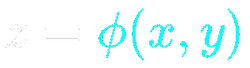
we call the cyan part the "Shape Function".
If we now consider to let time flow, we will oscilate the shape
like so :

usually by convention, the cyan part is ranged between -1 to 1.
sometime we might wiggle the metal plate way further or way subtle.
This means we need to scale it with an Amplitude :

On a Rope, let's say you found a frequency that the rope has a single buldge.
This frequency is what we call a "Fundamental Frequency", for short, let's call it "fund"
On a string, there are other frequencies that cause the rope to go into "Standing Wave mode",
usually "2fund", "3fund", "4fund" ... "Nfund"
these are all the ways that a rope can wiggle in "Standing Wave Mode"
The same thing happens on a metal plate :
different frequencies can excite different modes ("shape").
if we were to only focus on one shape, it should look like this :

but since a metal can vibrate in multiple modes,
and sometimes a frequency can excite multiple Modes
we will have the following :

A shortcut
we actually don't have to do ALL the work
The main idea of KOwOdni is like what we do on the metal plate :
using the sand to draw patterns
since the sand lands on the part of the metal plate where it barely moves,
we can have :

let's say at a very specific moment, say t = T,
sin(ft+p) reaches it's biggest magnitude,
but there are parts of the metal plate not vibrating.
this means :
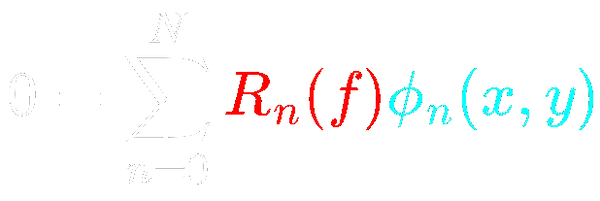
and there we have it OwO
this is what KOwOdni is drawing
I don't know where to start QAQ
we got you covered OwO/
here are some shape functions that ressembles the shape of a Chladni Metal Plate can vibrate :
sin(n * pi * x) * sin(m * pi * y) - sin(m * pi * x) * sin(n * pi * y)
cos(n * pi * x) * cos(m * pi * y) + cos(m * pi * x) * cos(n * pi * y)
© Memo2007Ultra
bottom of page